Teeth-In-A-Day may be a tooth replacement option for some patients with multiple missing or failing teeth, but it requires careful assessment and planning. The name can suggest that every stage is completed in one visit, yet the actual process, timing, and type of replacement teeth can vary.
A dentist needs to assess the teeth, gums, bone, bite, oral health, medical history, and treatment goals before determining whether this approach may be appropriate. Patients researching Teeth-In-A-Day in Welland should ask what the term means for their particular treatment plan rather than assuming a guaranteed same-day result.
What Teeth-In-A-Day Usually Refers To
Teeth-In-A-Day generally refers to a treatment approach in which dental implants are placed to support a fixed set of replacement teeth. It is often discussed for patients who are missing many teeth or whose remaining teeth may not be suitable for continued use.
Depending on the plan, the treatment may involve replacing an upper arch, lower arch, or both. Several implants can be positioned to support a larger dental restoration rather than placing a separate implant for every missing tooth.
The phrase “in a day” usually describes part of the process, not necessarily the completion of every stage. Some patients may receive temporary replacement teeth around the time implants are placed. A final restoration may be planned after the area has healed and the dentist has evaluated its progress.
Not everyone can receive replacement teeth on the same day as implant placement. The type of temporary restoration, if one is used, may also differ from the final teeth in shape, material, fit, or function.
Ask the dentist to explain:
- Which steps may occur on the treatment day
- Whether temporary replacement teeth are being considered
- When a final restoration could be planned
- What could cause the sequence or timing to change
- Which restrictions may apply during healing
A clear explanation is more useful than relying on the treatment’s name alone.
Why Treatment Planning Comes First
Treatment planning determines whether an implant-supported approach may be appropriate and how it could be completed safely. A dentist can’t make that decision based only on the number of missing teeth.
The assessment may include an examination of the mouth, a review of medical and dental history, and dental imaging. The dentist may consider the condition of the remaining teeth, health of the gums, amount and quality of available bone, bite, and space for a replacement.
Health conditions, medications, tobacco use, grinding habits, and the ability to maintain daily oral hygiene may also influence planning. Having one of these factors doesn’t automatically rule out treatment, but it may change the recommendation or require additional care.
Patients should ask whether any existing dental or gum concerns need attention first. If teeth remain, the dentist must evaluate whether they can be maintained or whether removing any of them is being considered. That decision should be explained carefully.
Questions about treatment planning may include:
- What records or imaging do you need?
- What are you evaluating in my case?
- Are any of my current teeth maintainable?
- Is there enough bone to consider implant placement?
- Would preparatory treatment be needed?
- Which type of temporary or final teeth could be considered?
- Who would complete each stage?
- What could make the treatment plan change?
A personalized assessment can identify limitations that aren’t visible in photographs or online questionnaires. It also allows the patient to compare Teeth-In-A-Day with other tooth replacement options.
How Dental Implants May Support Replacement Teeth
Dental implants are small posts placed in the jawbone to provide support for replacement teeth. They are designed to function as artificial tooth roots beneath a crown, bridge, or larger implant-supported restoration.
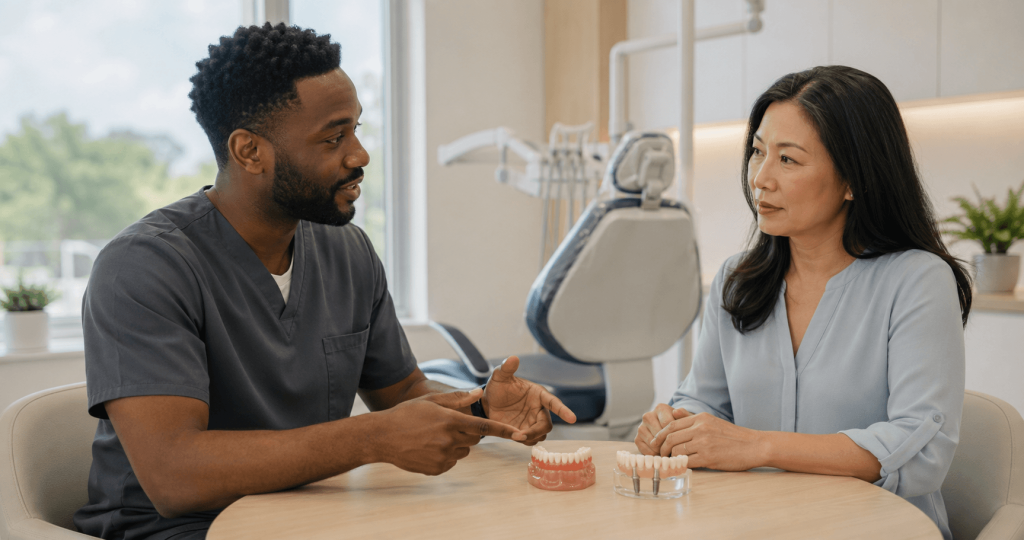
With Teeth-In-A-Day, several implants may be used to support a fixed set of replacement teeth. The number, position, and type of implants depend on the patient’s anatomy and proposed restoration. A dentist must evaluate whether the implants can receive a temporary restoration and what limitations may be required during healing.
Patients can learn more about dental implants in Welland before discussing how implants may fit into their treatment plan.
It’s helpful to distinguish between the implant and the teeth attached to it. The implant is the part placed in the jawbone. The visible replacement may be a crown, bridge, or full-arch restoration. These components may have different maintenance needs and may not be completed at the same stage.
Healing remains part of implant treatment even when temporary teeth are provided early. Patients may receive instructions about eating, brushing, and caring for the area. Follow-up appointments allow the dental team to monitor the implants, surrounding tissues, bite, and temporary restoration.
Ask how the proposed teeth will be supported, which materials may be used, and what changes may occur between temporary and final restorations. These details can help set realistic expectations.
How Dentures and Other Options May Compare
Implant-supported treatment isn’t the only way to replace missing teeth. Depending on the number and location of missing teeth, alternatives may include traditional dentures, implant-supported dentures, fixed bridges, or individual implant-supported crowns.
Traditional dentures are removable and may replace several teeth or a complete arch. They don’t require implant placement, although they have their own fit, adjustment, maintenance, and care considerations.
Implant-supported dentures combine implants with a removable replacement. This approach differs from a fixed full-arch restoration because the patient may remove the denture for cleaning. The number of implants and design depend on the individual treatment plan.
Woodlawn Dental Office provides information about dentures in Welland for patients comparing tooth replacement options.
The right choice depends on more than appearance. Ask how each option may affect cleaning, eating, speech, comfort, treatment involvement, and future maintenance. You may also want to discuss how much natural tooth structure remains and whether any current teeth can be preserved.
No option is maintenance-free. Dentures may require adjustments as the mouth changes. Implant-supported restorations require care around the gums and implant areas. Crowns, bridges, and denture components may eventually require repair or replacement.
A balanced consultation should explain why one approach is being recommended and what alternatives remain available.
What to Avoid Assuming Before Treatment
The name Teeth-In-A-Day can create expectations that may not match every patient’s experience. Avoid assuming that everyone qualifies, that the final teeth are always completed in one appointment, or that the process involves no healing period.
You should also avoid assuming:
- Every remaining tooth needs to be removed
- Every patient requires the same number of implants
- Temporary and final teeth are identical
- Treatment follows one standard timeline
- Implants require no maintenance
- A fixed restoration can never need repair
- Eating will immediately feel the same as with natural teeth
- One advertised price covers every possible treatment need
- Insurance will cover the recommended care
- Results can be guaranteed
Online photographs can show what may be possible, but they can’t predict an individual result. Bone, gums, bite, facial proportions, healing, and the type of restoration can all influence treatment.
Cost estimates also require a personalized plan. The total may reflect examinations, imaging, extractions if required, implant placement, temporary teeth, final teeth, follow-up care, or other procedures. Ask for a written estimate and clarification about what is included.
If you feel rushed or don’t understand part of the recommendation, ask for more information before deciding. Replacing many teeth is a significant decision, and you should understand both the potential benefits and the responsibilities involved.
Questions to Ask Before Choosing Teeth-In-A-Day
Arriving with questions can help you use the consultation effectively. Start by asking what the dentist believes can reasonably be addressed in your situation.
Useful questions include:
- What does Teeth-In-A-Day mean in my treatment plan?
- Am I being assessed for temporary or final replacement teeth?
- Which existing teeth may be kept?
- How many implants might be considered and why?
- What imaging or records are required?
- Are there oral health concerns that need attention first?
- What alternatives should I compare?
- What could change the proposed timeline?
- What eating or cleaning instructions may apply?
- How would I clean beneath or around the replacement teeth?
- What follow-up visits may be required?
- Could the restoration need future repair or replacement?
- Which costs are included in the estimate?
- What happens if implants can’t support temporary teeth immediately?
The dentist should explain unfamiliar terms and identify where the plan remains uncertain. An estimate of timing is helpful, but it shouldn’t be treated as a guarantee.
Ask whether another dental professional will be involved in any stage and how information will be shared between providers. Knowing who is responsible for implant placement, restoration design, follow-up, and maintenance can make the process easier to understand.
Frequently Asked Questions About Teeth-In-A-Day in Welland
What does Teeth-In-A-Day mean?
The term usually refers to an implant-supported approach that may allow temporary replacement teeth to be provided around the time of implant placement. The exact process varies, and final teeth may be completed later. Ask the dentist what “in a day” means for the proposed plan.
Is Teeth-In-A-Day right for everyone?
No. Suitability depends on the teeth, gums, bone, bite, oral and general health, and other individual factors. A dental assessment and appropriate imaging are needed before a recommendation can be made.
Can Teeth-In-A-Day replace all missing teeth?
It may be considered for replacing a full upper arch, lower arch, or both in some patients. It may not be appropriate for every pattern of tooth loss or every patient. The dentist must evaluate the specific situation.
Are dentures still worth discussing?
Yes. Traditional or implant-supported dentures may remain suitable options for some patients. They differ from fixed implant-supported teeth in treatment requirements, cleaning, maintenance, and how they are worn. All reasonable alternatives should be discussed.
What should I ask before choosing this option?
Ask about candidacy, remaining teeth, implant support, temporary and final restorations, healing, maintenance, alternatives, risks, cost factors, and expected stages. Make sure you understand which parts of the plan are estimates rather than guarantees.
Talk to Woodlawn Dental Office About Replacing Missing Teeth
Teeth-In-A-Day may provide an implant-supported tooth replacement option for some patients, but the decision begins with assessment and careful planning. The term shouldn’t be interpreted as a promise that every stage or final result will be completed in one visit.
If you’re exploring options for missing or failing teeth, contact Woodlawn Dental Office to ask a question or request a consultation about replacing missing teeth in Welland.